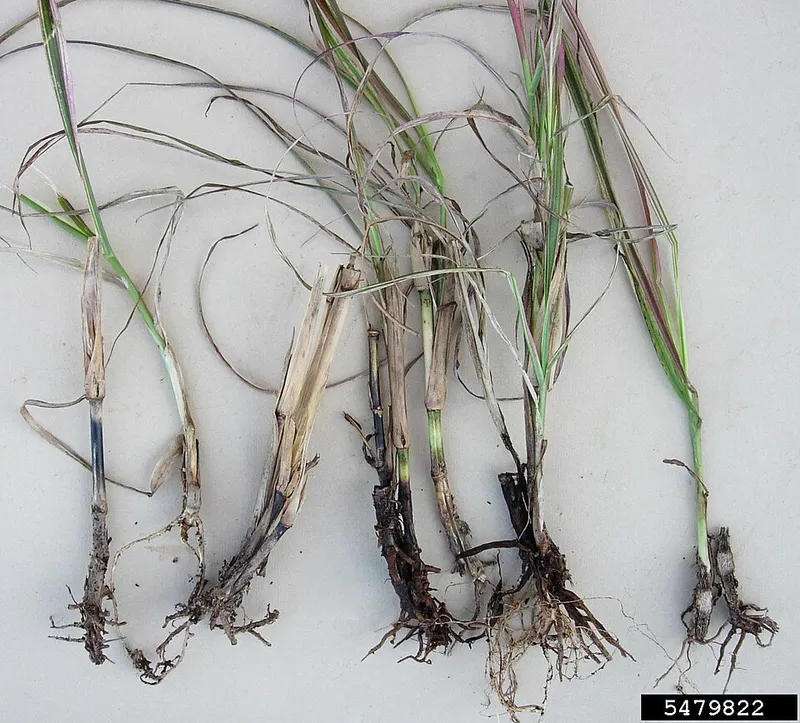
About Take-All Root Rot
Take-all root rot (Gaeumannomyces graminis) is not a significant disease of tall fescue in Middle Tennessee. It is studied in certification and licensing coursework, but in nearly fifteen years of field practice in our service area, it has not been a meaningful diagnosis on fescue lawns.
If your Middle Tennessee fescue lawn is dying and you suspect a root disease, the overwhelmingly more likely culprits are brown patch (Rhizoctonia solani), dollar spot (Sclerotinia homoeocarpa), or pythium blight (Pythium aphanidermatum). All three of these are common, predictable, and preventable in our climate zone. Take-all root rot is none of those things here.
Take-all root rot is more commonly associated with St. Augustine grass and Bermuda grass in the Deep South and Gulf Coast regions. If you are reading about it online, the information is probably written for a different climate zone and a different grass species than what you have in your Middle Tennessee yard.
Quick Facts
- Common Name
- Take-All Root Rot
- Scientific Name
- Gaeumannomyces graminis
- Type
- Lawn & Landscape Disease
- Region
- Middle Tennessee