Core Aeration vs Liquid Aeration: Choosing the Right Method for Successful Seed Establishment
By AJ Binkley, UT Certified Lawn Care Professional
If you're planning to overseed your Middle Tennessee lawn this fall, you've probably heard about both core aeration and liquid aeration as ways to prepare your soil for new seed. But which one should you choose? After helping homeowners throughout Columbia, Franklin, Spring Hill, and surrounding areas with countless seeding projects, I can tell you the answer depends on your specific situation.
Let me break down when each method makes the most sense for successful seed establishment.
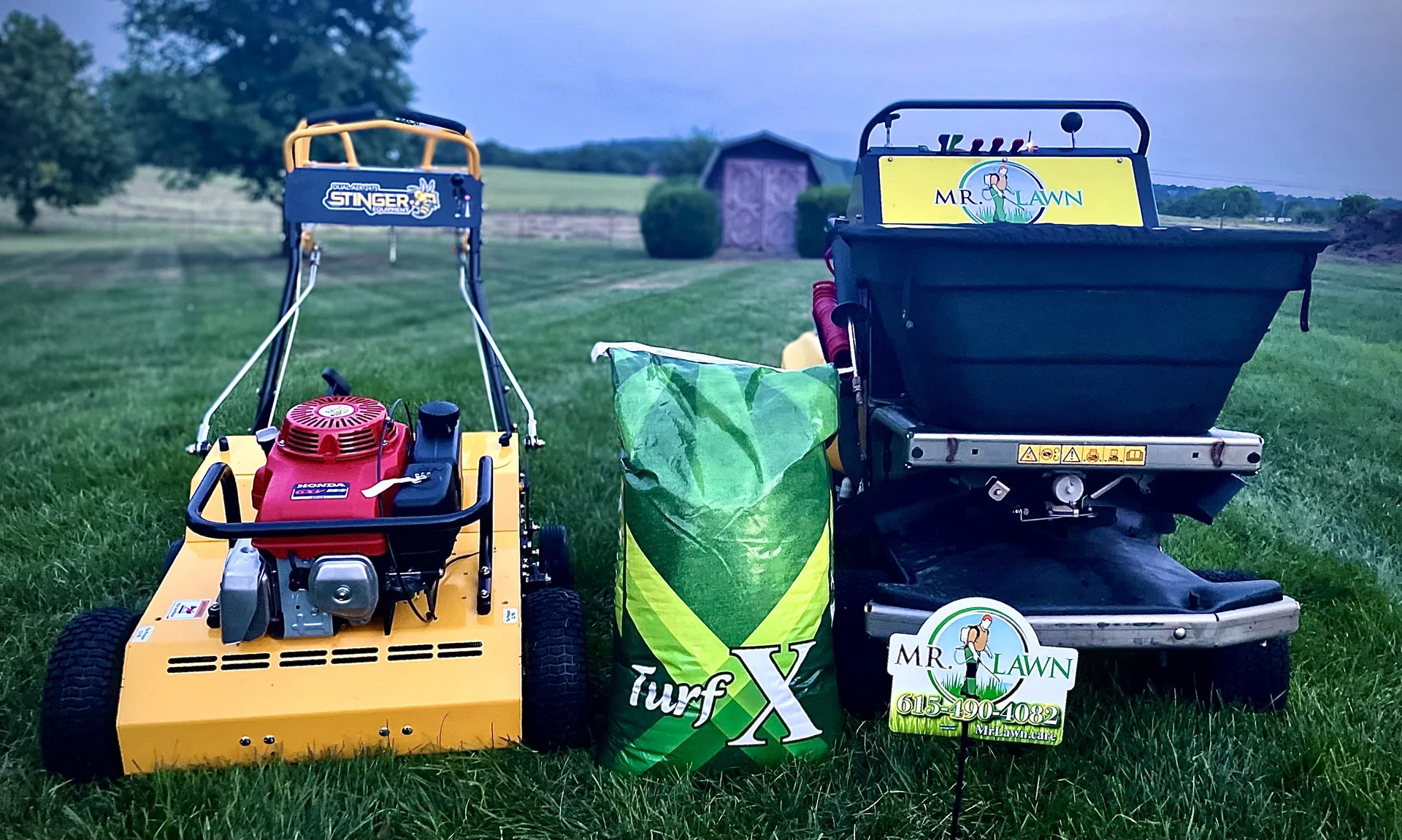
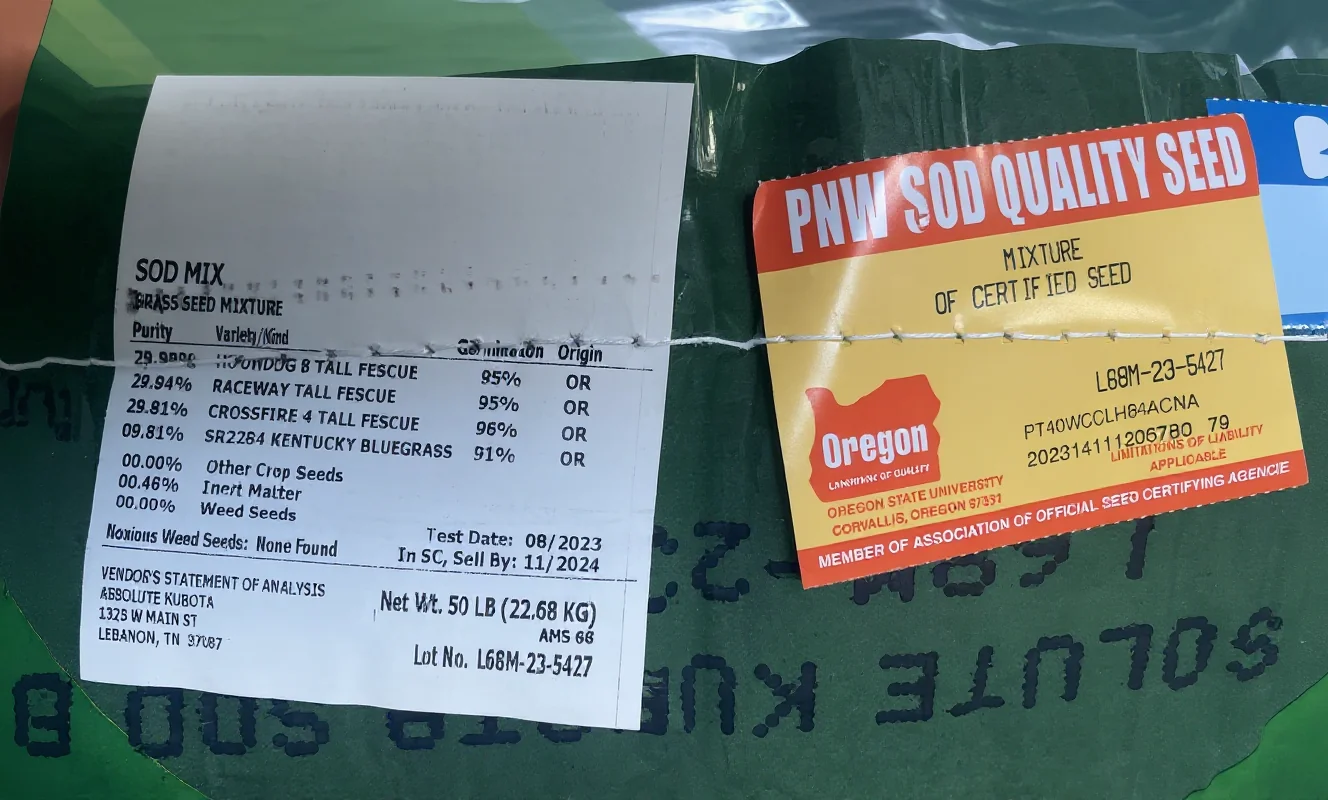
The core aeration and overseeding setup: hollow-tine aerator, gold-tag certified fescue seed, and the Z-Spray spreader-sprayer for liquid aeration and fertilizer application.
Understanding the Two Approaches
Core Aeration uses a machine with hollow tines to physically pull plugs of soil from your lawn, creating holes that provide direct seed-to-soil contact. While it does temporarily loosen soil, the compaction relief only lasts a few weeks — the real value of core aeration is as the least aggressive way to ensure seed touches bare dirt without killing existing grass.
Liquid Aeration applies a liquid solution that works to improve soil conditions and create better environments for seed germination without the physical disruption of mechanical aeration.
Both can help with seed establishment, but they work differently and shine in different scenarios.
When Core Aeration Is Your Best Choice
Fighting Bermuda Grass Invasion
If you have common Bermuda grass creeping into areas where you want to establish fescue, core aeration is typically your most effective option. Bermuda grass forms a thick, dense mat that's incredibly difficult for fescue seedlings to penetrate. The physical holes created by core aeration give your new fescue seed direct access to the soil, bypassing that Bermuda barrier.
I've seen countless Middle Tennessee lawns where homeowners tried to overseed over Bermuda without proper aeration — the results are usually disappointing. The new seed either can't establish or gets quickly overwhelmed by the aggressive Bermuda.
For lawns with severe compaction — often found in high-traffic areas, clay soils, or properties with construction damage — core aeration provides short-term physical relief and, more importantly, creates the openings that seed needs to germinate in otherwise impenetrable soil.
Signs you're dealing with severe compaction:
Water pools on the surface after irrigation or rain
Soil feels rock-hard when you try to insert a screwdriver
Existing grass is thin and struggles despite adequate fertilization
You can barely push a soil probe into the ground
In these situations, liquid aeration alone typically isn't aggressive enough to create the immediate changes needed for successful seed establishment.
New Construction or Heavily Damaged Areas
If you're dealing with builder-grade soil or areas that have been severely damaged, core aeration helps create the physical openings that new seed needs to get established in challenging conditions.
When Liquid Aeration Makes More Sense
The Muddy Paws Problem
One of the biggest complaints I hear from homeowners after core aeration is the mess factor. Those soil plugs create muddy conditions that get tracked into the house on shoes, paws, and everything else. If you have pets or kids who spend a lot of time in the yard, or if you're particularly concerned about maintaining a clean outdoor space during the seeding process, liquid aeration eliminates this issue entirely.
Shaded Areas That Need Gentle Treatment
Lawns with lots of shade often have delicate growing conditions that can be disrupted by the aggressive nature of core aeration. Shaded areas typically have thinner, more fragile existing grass, moisture retention issues, and slower recovery from physical disruption. Liquid aeration provides a gentler approach that won't further stress these already-challenging growing environments while still creating better conditions for seed establishment.
Properties with Calibrated Irrigation Systems
If you have a properly calibrated irrigation system that's been set up for precise water management, core aeration can temporarily disrupt your watering patterns. The holes change how water moves through your soil, potentially throwing off your carefully tuned irrigation timing. Liquid aeration allows you to maintain your existing irrigation schedule while improving conditions for seed establishment.
Overseeding Existing Healthy Turf
When you're overseeding into relatively healthy existing grass — maybe just thickening up thin areas or adding new varieties — liquid aeration can provide the soil improvement you need without the physical disruption that might damage your existing turf.
Middle Tennessee Specific Considerations
Timing Matters More with Core Aeration. Our fall seeding window in Middle Tennessee (late August through mid-October) can be tight. Core aeration requires additional recovery time before seeding, while liquid aeration can often be applied closer to your seeding date.
Clay Soil Challenges. Many Middle Tennessee properties have clay soil that becomes extremely hard when dry. While core aeration works well in clay, you need adequate soil moisture for the machine to pull proper plugs. Liquid aeration can work in a wider range of soil moisture conditions.
Fescue-Specific Needs. Since most of us are working with tall fescue lawns, consider that fescue seed benefits from good seed-to-soil contact. Core aeration provides this directly, while liquid aeration creates conditions that help with overall germination and establishment.
Cost and Maintenance Considerations
Core Aeration: Higher upfront cost for equipment rental or professional service, more labor-intensive, requires cleanup of soil plugs, may need additional watering adjustment during establishment.
Liquid Aeration: Generally lower cost for materials, easier application, no cleanup required, maintains existing lawn appearance during process.
Making Your Decision: A Practical Framework
Choose Core Aeration if:
You're fighting Bermuda grass invasion
You have severe soil compaction
You don't mind the temporary mess and disruption
You have time for proper soil plug breakdown before seeding
You're dealing with new construction or severely damaged soil
Choose Liquid Aeration if:
You want to avoid muddy conditions
You have lots of shade or delicate growing conditions
You have a calibrated irrigation system
You're overseeding healthy existing turf
You prefer a gentler, less disruptive approach
Combining Methods: When It Makes Sense
Sometimes the best approach combines both methods: core aerate problem areas (Bermuda invasion, severe compaction), liquid aerate the rest of the lawn for overall improvement, and target specific challenges while maintaining overall lawn health.
Professional vs DIY Considerations
Core Aeration: Equipment rental is readily available, but proper technique matters for good results. Professional services ensure proper timing and technique.
Liquid Aeration: Generally more DIY-friendly, but product selection and application rates are important for effectiveness.
The Bottom Line for Middle Tennessee Homeowners
Both core aeration and liquid aeration can help with seed establishment, but they're tools for different situations. Don't get caught up in debates about which is "better" — instead, match the method to your specific lawn conditions and constraints.
For most Middle Tennessee properties dealing with typical overseeding scenarios, either method can work. The key is understanding your priorities: are you fighting specific problems like Bermuda invasion or severe compaction (core aeration), or are you looking for improvement with minimal disruption (liquid aeration)?
Frequently Asked Questions
Can I do both core aeration and liquid aeration in the same year? Yes, but typically you'd core aerate first, then apply liquid aeration later in the season. There's usually no need to do both simultaneously.
How close to seeding can I apply each method? Liquid aeration can often be applied just before seeding. Core aeration should typically be done 2-4 weeks before seeding to allow soil plugs to break down.
Which method works better in clay soil? Core aeration can be very effective in clay soil when done at proper soil moisture. Liquid aeration works in clay but may take longer to show results.
What about cost differences? Core aeration typically has higher upfront costs but covers the entire lawn. Liquid aeration products vary widely in price and coverage, so compare carefully.
Ready to Prepare Your Lawn for Successful Seeding?
Choosing between core aeration and liquid aeration doesn't have to be complicated. The key is matching the method to your specific situation and goals.
At Mr. Lawn Care, we've helped hundreds of Middle Tennessee homeowners achieve successful seed establishment using both methods. We can evaluate your specific lawn conditions and recommend the approach that makes the most sense for your property.
We serve homeowners throughout Columbia, Franklin, Spring Hill, Brentwood, and the surrounding areas. Give us a call at (615) 490-4082) or email aj@mrlawn.care to discuss your fall seeding project.
Been helping Middle Tennessee homeowners choose the right aeration method for their specific situations for over a decade. Every lawn is different, but the principles of matching method to conditions remain the same. Got questions about preparing your lawn for fall seeding? Feel free to reach out.

If you've noticed thick, fast-growing grass blades that look different from the rest of your lawn this year, you're dealing with contaminated seed issues affecting homeowners nationwide. Learn how to identify and eliminate quack grass and Johnson grass.
Dealing with thick, fast-growing grass blades that stand out from your regular lawn? Learn how to identify quack grass, understand why it's so hard to eliminate, and discover your best options for reclaiming your Middle Tennessee lawn.
It's not a matter of if your fescue lawn will get brown patch disease, it's a matter of when. Learn how to prevent and manage this inevitable summer challenge in Middle Tennessee's humid climate.