About Dollar Spot
Dollar spot (Sclerotinia homoeocarpa) is the second most common fungal disease of fescue lawns in Middle Tennessee, and it very often appears alongside brown patch in the same yard. If your grass is susceptible enough to get one, you are likely getting the other, they favor the same conditions of high humidity, warm nighttime temperatures, and dew-wet blades.
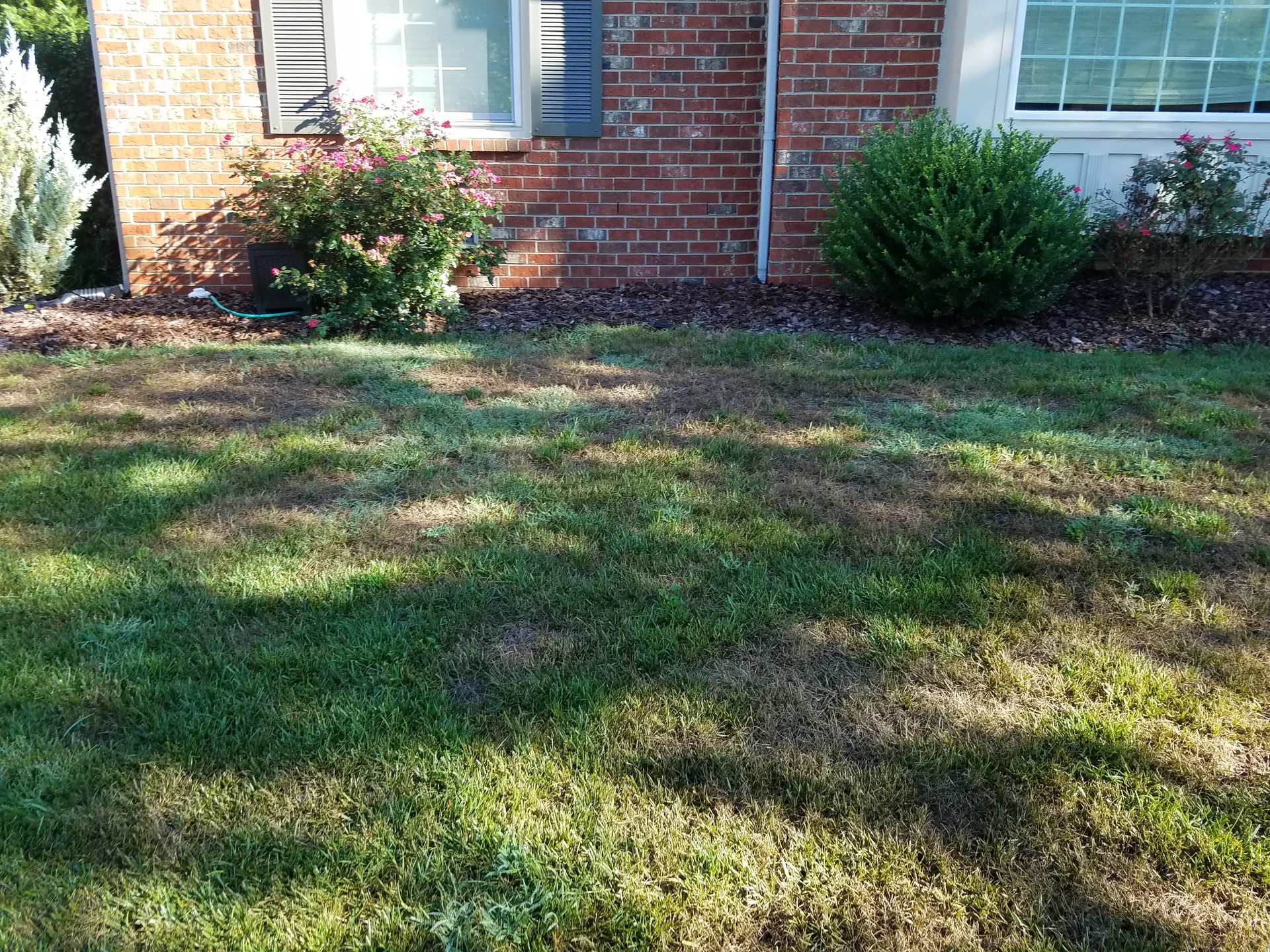
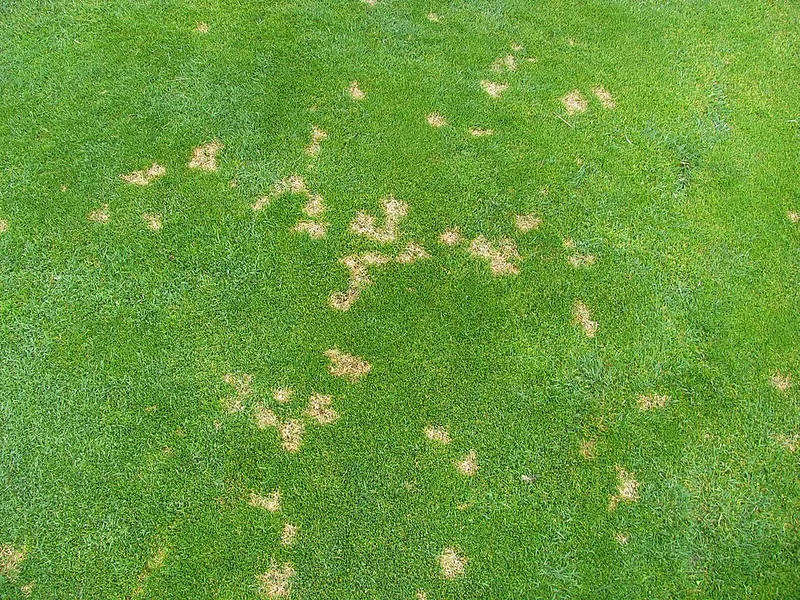
In its classic early stage, dollar spot produces small brown patches roughly one to three inches in diameter, about the size of a silver dollar, which gives the disease its name. These small patches are the easiest phase to diagnose. As the pathogen spreads, the individual spots coalesce into larger dead areas, and at that stage it becomes harder to distinguish from brown patch or drought without a closer look.
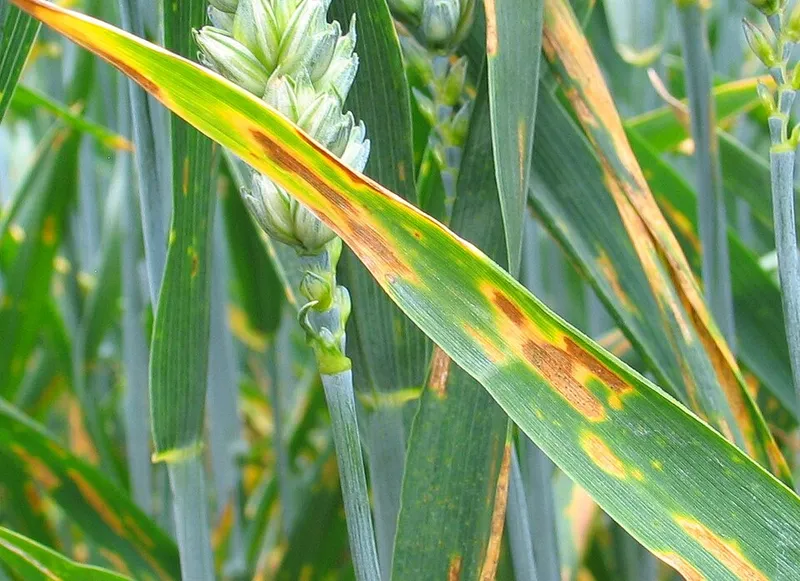
The definitive field identification test uses the same technique as brown patch: walk to the edge of the affected area where brown transitions back to green, pull up some green leaf blades, and examine them closely. Dollar spot produces horizontal lesions, a green blade on the bottom, a green blade on the top, and a brown horizontal band running straight across the middle of the blade. This horizontal mid-blade band is the unambiguous dollar spot signature. Compare this to brown patch, where the lesions run vertically along the length of the blade.
Dollar spot is especially aggressive on hybrid Bermuda grass, far more susceptible than fescue or any other desirable turfgrass in our area. On Bermuda lawns, dollar spot can become the dominant summer disease problem.
In fescue lawns, dollar spot is covered by the same multi-mode preventive fungicide program that targets brown patch. The combination products applied on a twenty-eight-day cycle from May through August provide overlapping coverage for both diseases simultaneously. You are going to get both of these diseases in Middle Tennessee. There is no avoiding it. You either prevent them with a disciplined fungicide program, or you pay cure costs later, and curative-only use accelerates fungicide resistance, making the problem worse for everyone over time.
Quick Facts
- Common Name
- Dollar Spot
- Scientific Name
- Sclerotinia homoeocarpa
- Type
- Lawn & Landscape Disease
- Region
- Middle Tennessee