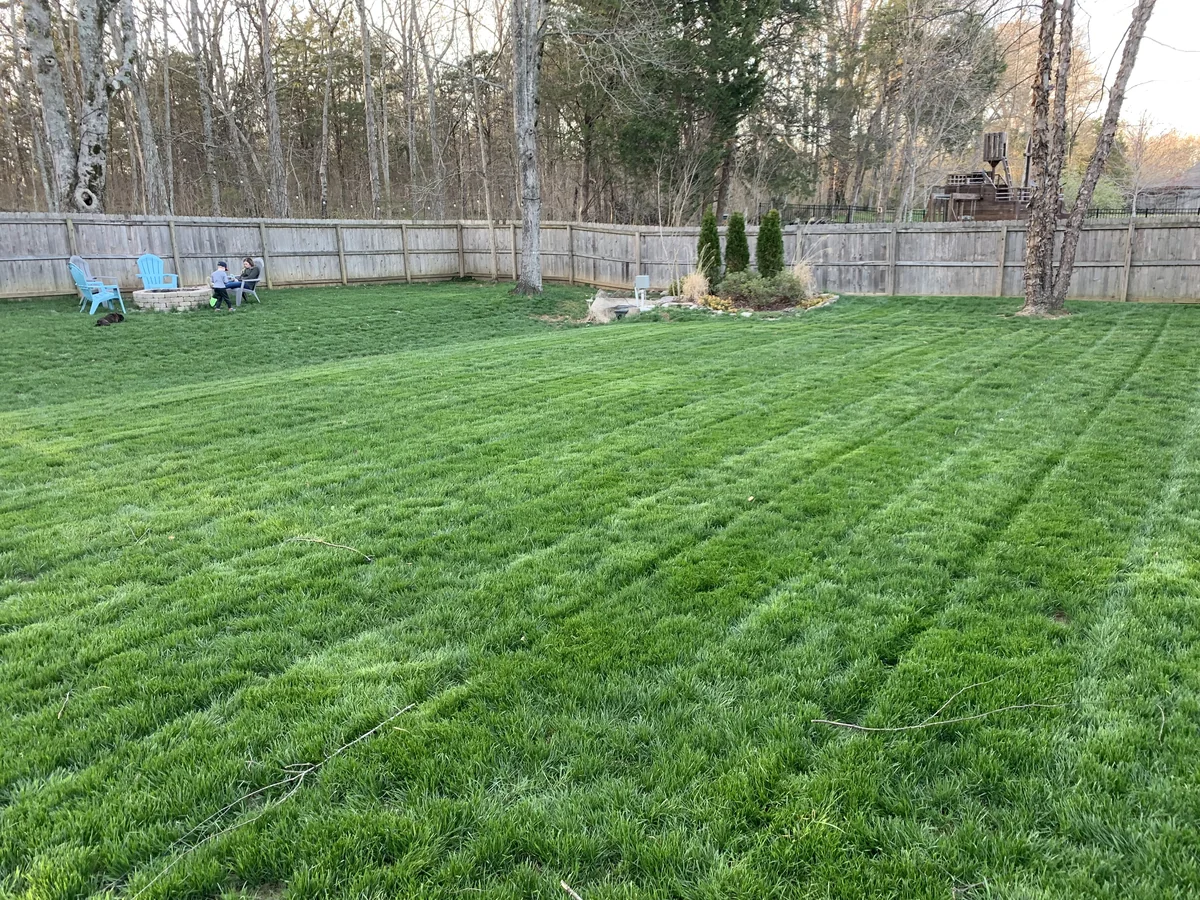
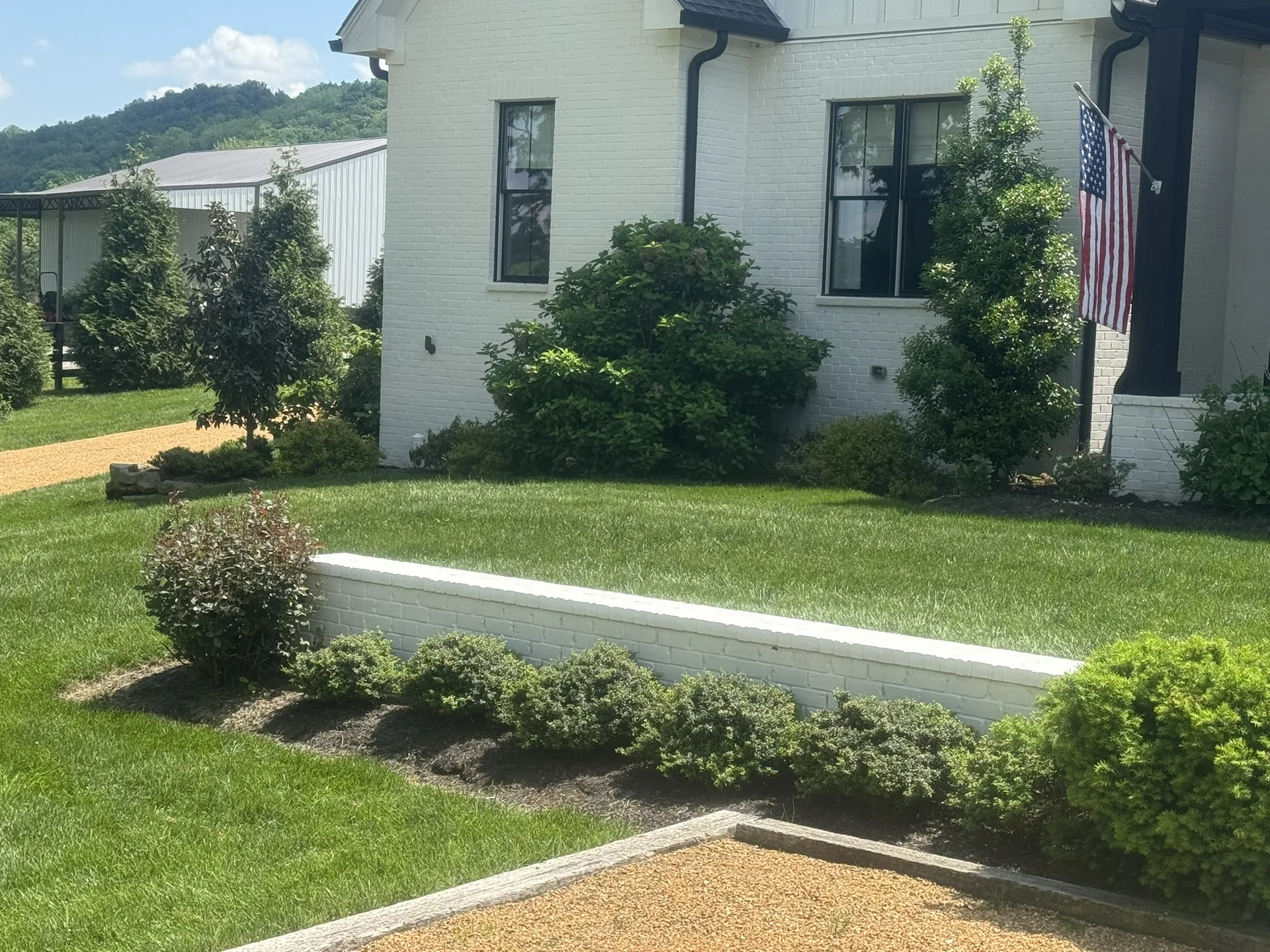
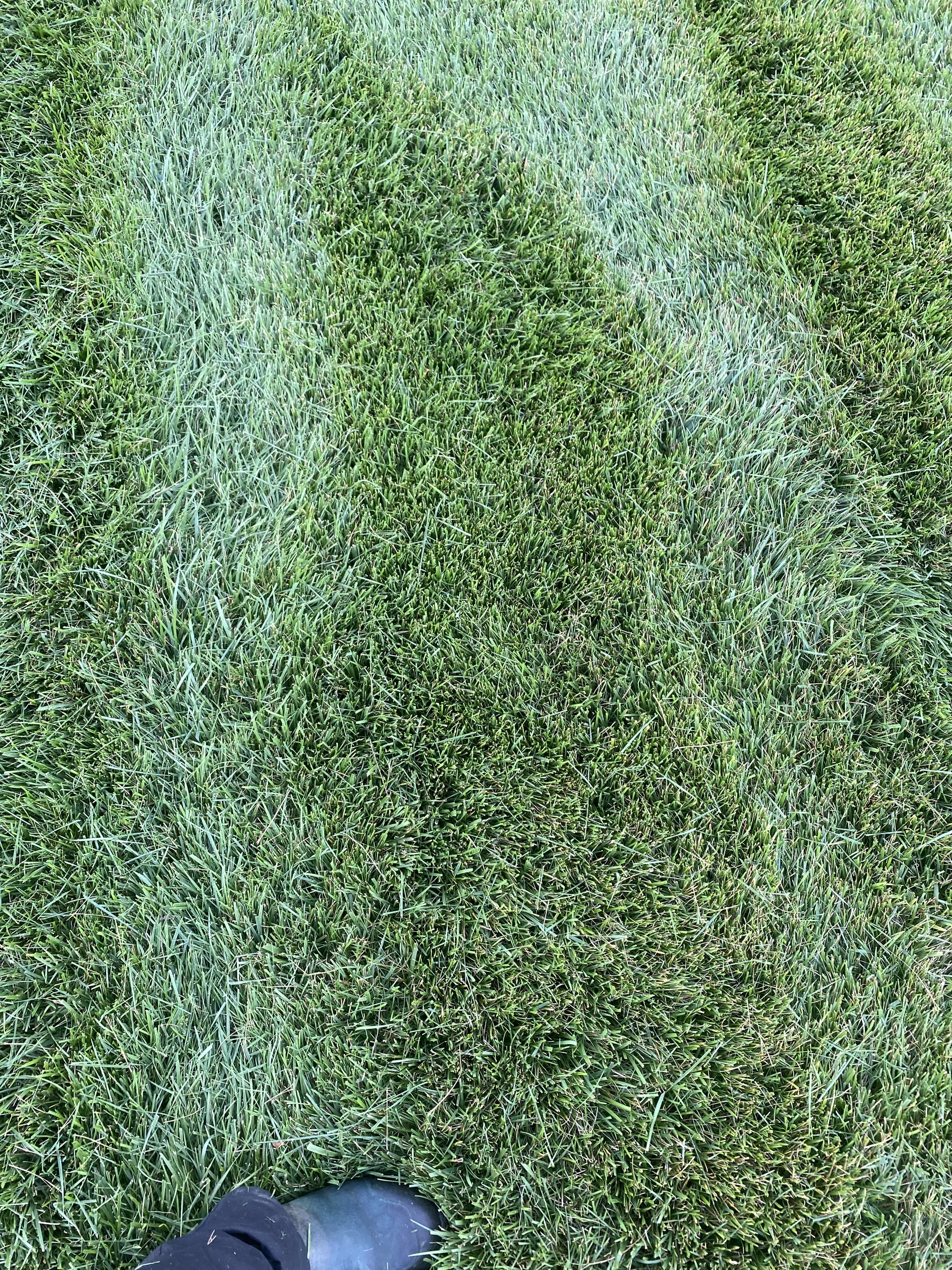
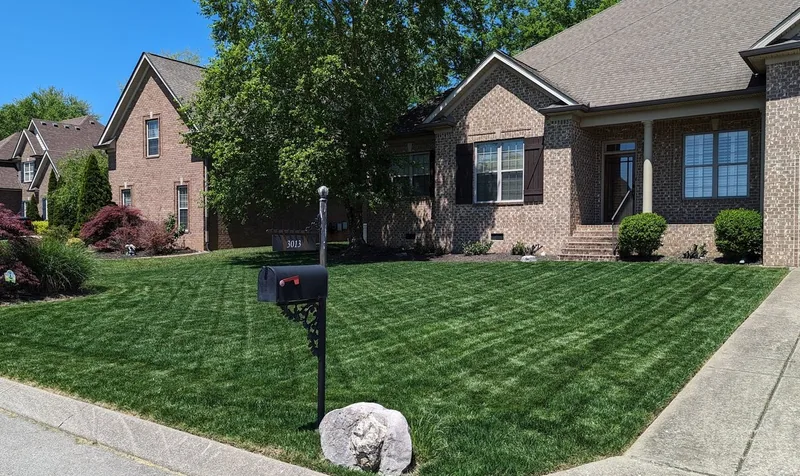
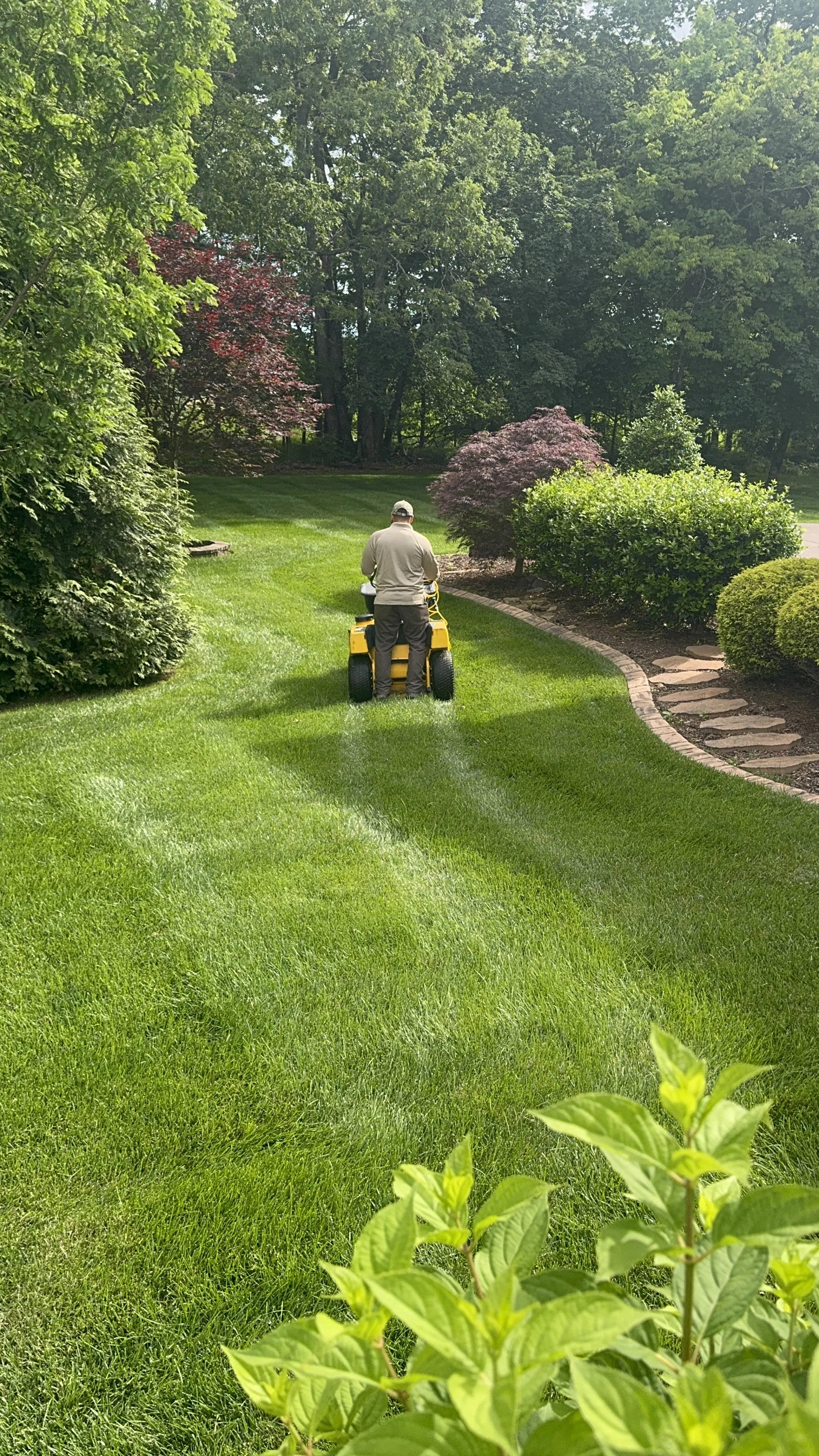
I have never seen a tree drop an acorn with a core aerator attached to it. Throw seed on open ground and roughly 90 percent of it finds somewhere to grow. I cannot run a business on 90 percent, though, and the missing tenth is never scattered at random. It is the shaded strip along the drive, the ground under heavy leaf drop, and the runs where common Bermuda grass, Cynodon dactylon, has matted over the soil surface. On open turf, aeration improves establishment a modest 10 to 15 percent over broadcasting alone. Where a Bermuda mat is intercepting seed, the holes drop it into soil it could never otherwise reach, and in my experience the improvement there runs closer to 75 or 90 percent.
I run parallel passes, then a second set at 45 degrees rather than 90, which lays a diamond and puts more holes per square foot in the ground. Seed drops through a metered seeder built into the aerator, straight down into the open holes, instead of being flung by a spinner into the mulch beds and the driveway.
On compaction, the accurate version rather than the sales version. Core aeration does relieve compaction, and it is essentially the only method that does so without tearing the lawn out first. It is temporary, since the holes close within weeks, and it takes real core density to register: Kansas State puts effective cultivation at 15 to 30 cores per square foot, and one commercial pass delivers about half that, which is math I have written out in full. Genuine compaction is also rarer than the industry admits, since freeze-thaw cycles and root channels work against it year-round. The lawns that truly have it are the ones people keep re-compacting, the backyard that hosts every gathering or the patch where a kid practices every evening. Those earn a second aeration in spring, which is what the standalone core and liquid aeration service is for. In fall, aeration earns its price on seed delivery, and everything I put down is guaranteed to germinate within 30 days. If an area does not come in, I re-aerate and reseed it at no charge.