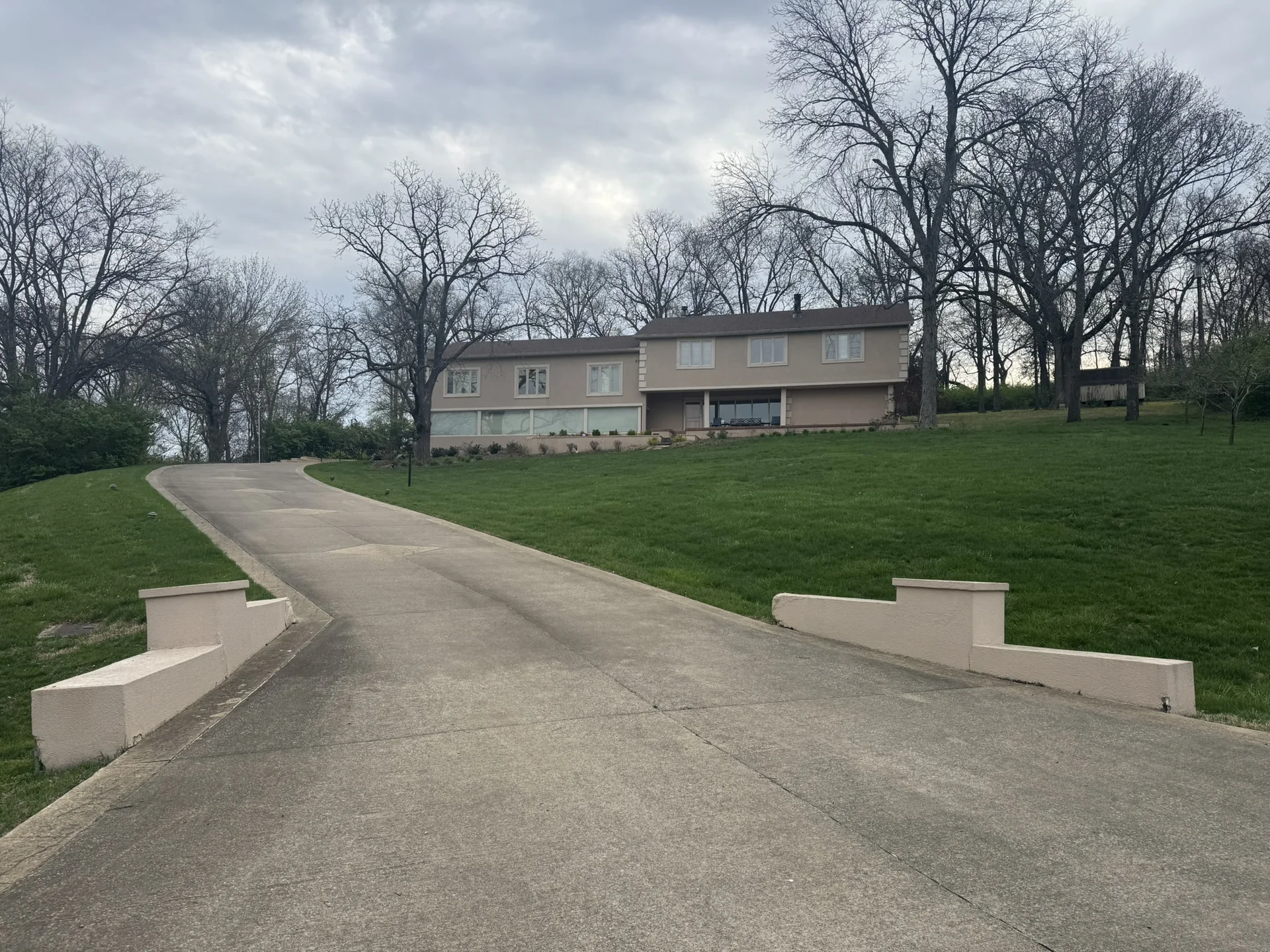
You already run this system on row crops, and turf has the same tiers.
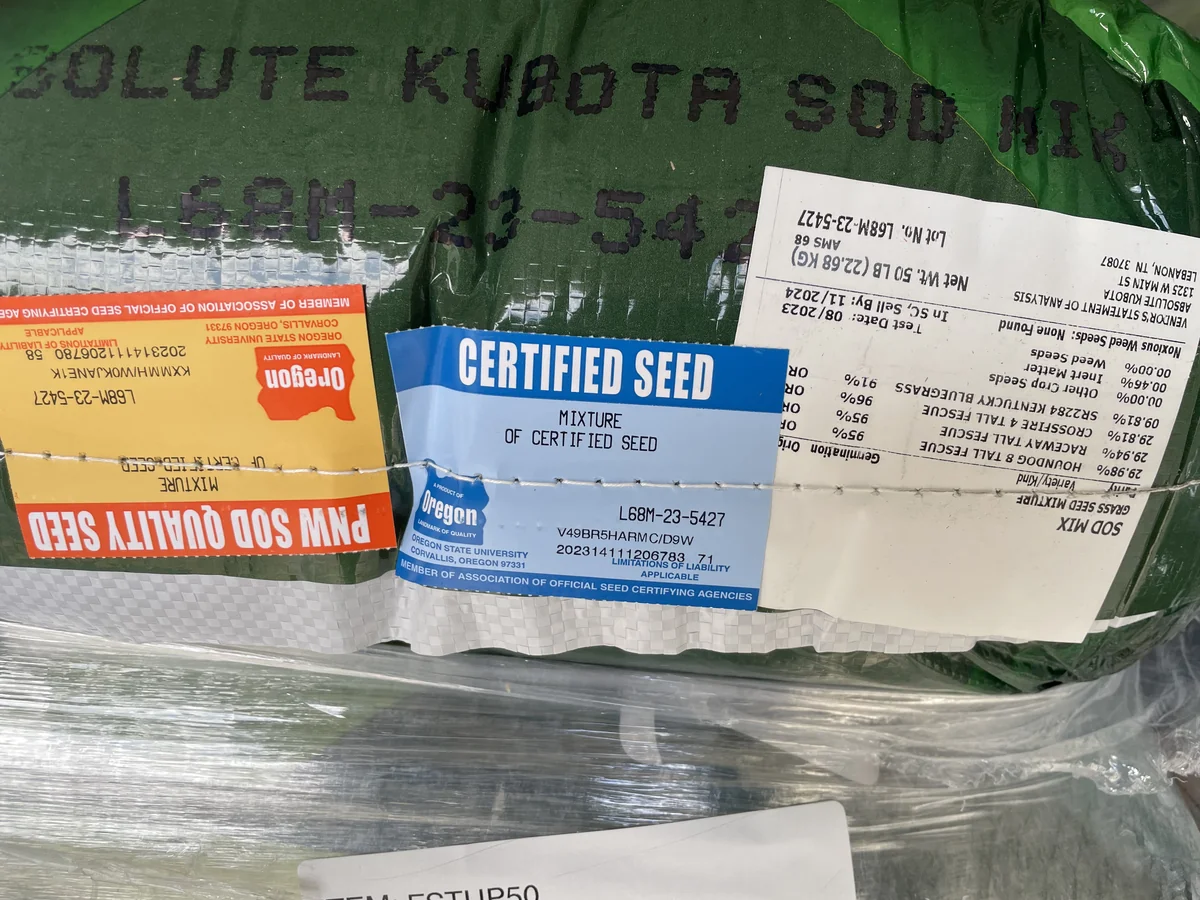
The blend runs 90 percent turf type tall fescue and 10 percent Kentucky bluegrass (Poa pratensis) by weight, closer to 30 percent by plant count because bluegrass seed is far smaller. That is the sod farm ratio, and it is not decoration. Tall fescue (Festuca arundinacea) produces only short rhizomes and spreads very little at mowing height, so a fescue stand cannot close its own bare spots. Bluegrass rhizomes can, so on a rural property the equipment ruts, the gravel drive edge, and the dog path fill back in on their own.
The fescue body of my mix is Traverse 2 SRP, 4th Millennium SRP, and Triad. All three are on UT Extension's list of statistically top-performing tall fescues for Tennessee (NTEP trials). The two SRP cultivars carry the rhizome trait for self repair along with improved brown patch resistance and strong turf quality in transition region trials, and Triad is the very dark, wear tolerant one that also holds up against gray leaf spot.
The bluegrass is Barvette HGT, and it is the piece of the mix I get most excited about. It came out of Barenbrug's Healthy Grass Technology program, which stress tests bluegrass genetics rather than selecting them for a catalog photo. It establishes unusually fast for a Kentucky bluegrass, which matters inside a narrow fall window. It knits laterally through rhizomes, so it is the layer of the stand that actually repairs damage. And it persists in transition zone trials where most bluegrass quits by its second summer, which is the reason a Tennessee lawn can carry bluegrass at all.
The mixture is documented disease insurance on top of that. A 2024 Agronomy Journal study measured 71 to 83 percent lower disease severity in stands built from at least 75 percent brown patch resistant cultivars, and earlier work in the International Turfgrass Society Research Journal found brown patch severity lower in fescue and bluegrass mixtures than in fescue alone. For a country lawn that will never see a regular fungicide, planting your disease resistance is the practical play, and the reasoning is in my piece on the fescue and bluegrass mix for Middle Tennessee.
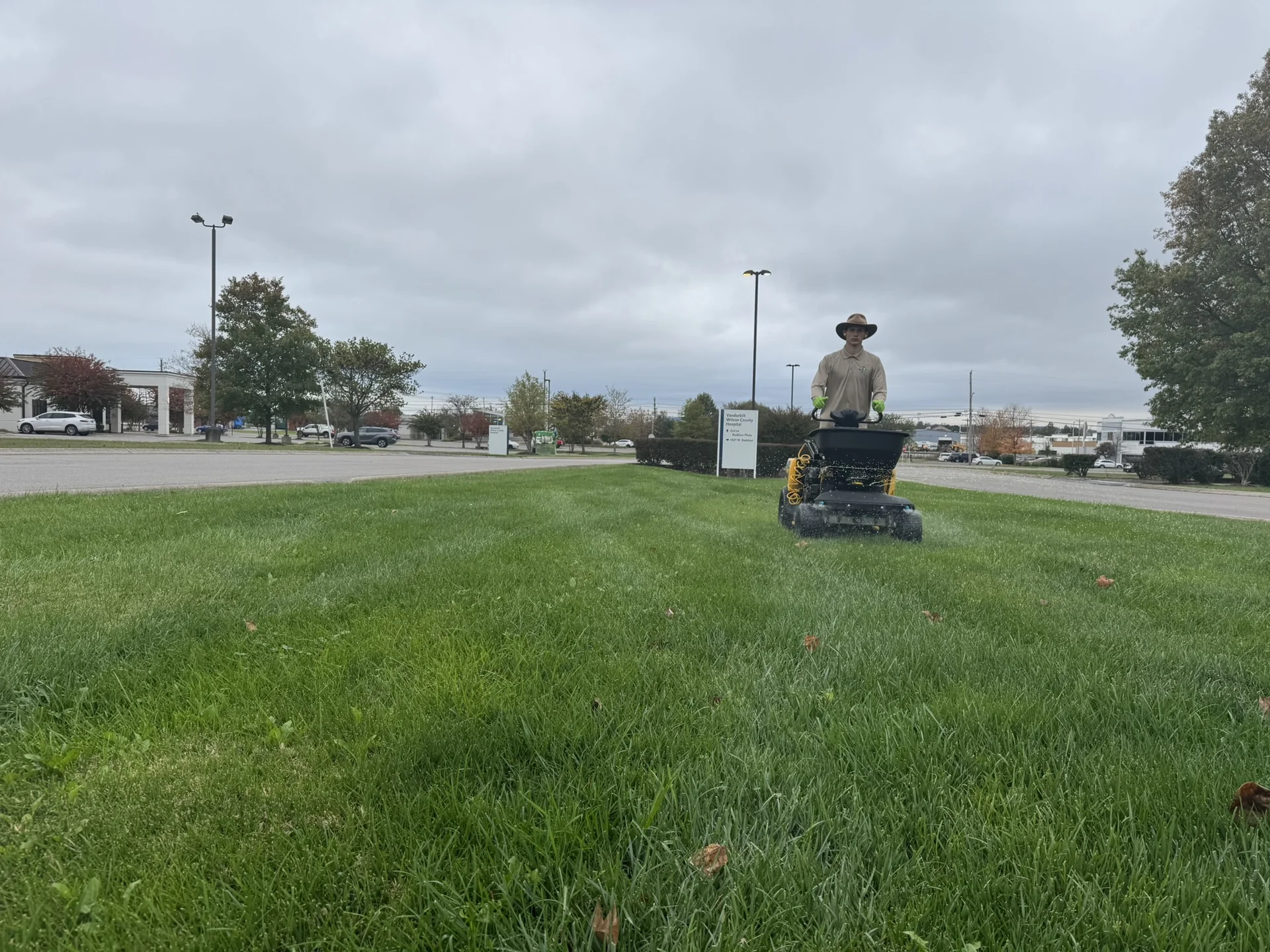
Rate follows the job: 6 to 7 pounds per thousand square feet on a typical overseed, up to 10 on bare ground, and on acreage I measure the actual turf instead of guessing from the deed.