Aeration for Lynnville Homeowners
If your Lynnville lawn looks thin and weak coming out of summer, you're not alone. On the bigger, sun-baked lots out toward Campbellsville Road or around the historic square, the combination of clay soil compaction and hot sun makes it tough for new grass to take root. You might have tried throwing seed down yourself, only to watch it wash away or never sprout, wasting your money and time.
The main reason grass struggles to thicken up on properties here is poor seed-to-soil contact. In Lynnville, our heavy clay soils compact easily, especially in areas that get a lot of sun or foot traffic. When you broadcast seed over existing turf, it sits on top of thatch or Bermuda runners and never actually reaches the soil. Without that direct contact, the seed can't germinate properly. That's where my service comes in. I use a commercial core aerator to pull thousands of soil plugs, creating perfect holes for seed. This isn't a cosmetic treatment; it's a mechanical process that physically bridges the gap between your seed and the soil it needs to grow.
The Right Seed For Your Soil
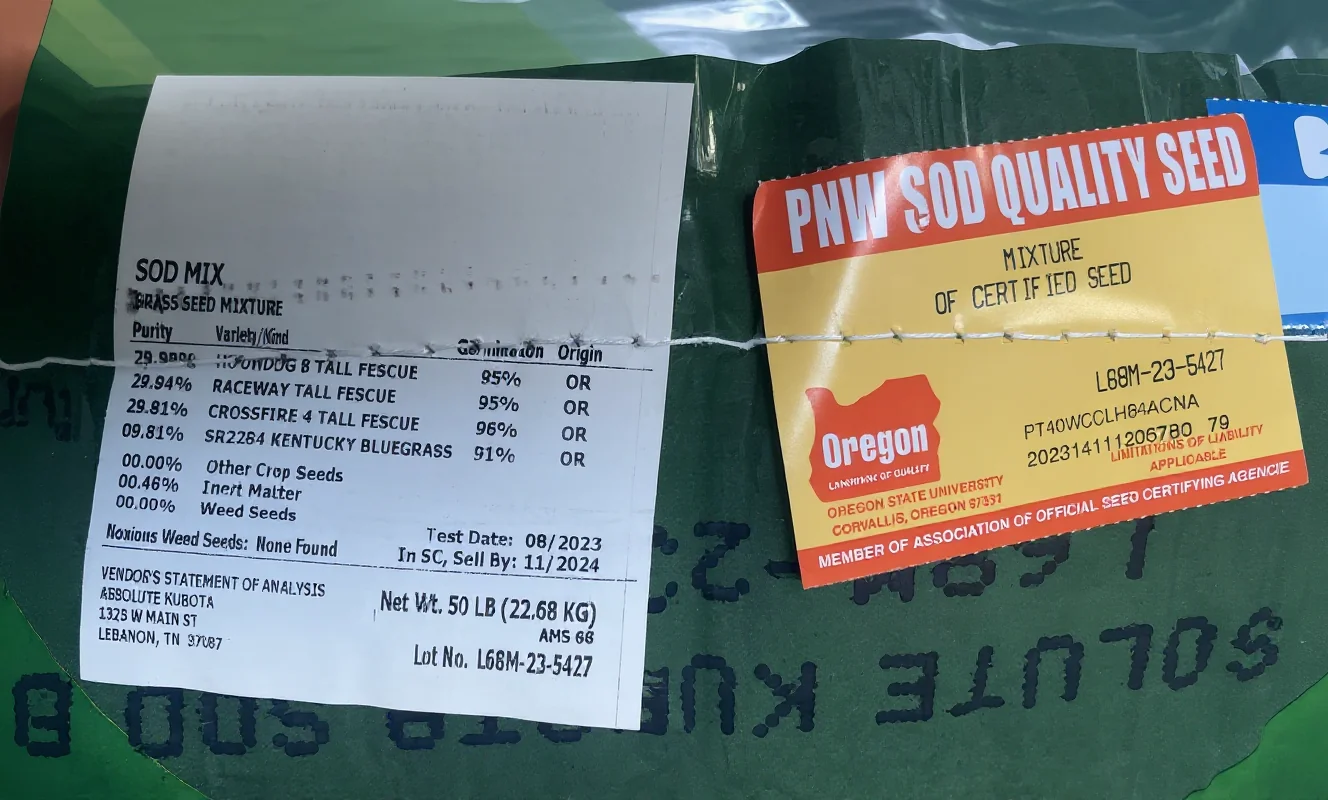
I don't just aerate; I overseed with a custom blend selected from university research trials for our specific climate. The seed I use is Sod Quality Certified, which means it's lab-tested to be free of the weed contaminants commonly found in cheap bagged seed or the straw that many folks use as cover. This is critical in Lynnville, where properties often border hay fields that can introduce weeds like dallisgrass. My blend is 90% turf-type tall fescue and 10% Kentucky bluegrass, the same ratio used on sod farms. The bluegrass adds drought tolerance and helps the lawn self-repair from foot traffic, which is perfect for homes hosting family during the Blackberry Festival or for yards where kids play.
My Diamond-Pattern Method
My technique is what sets this service apart. I make parallel passes with the aerator, then a second set at a 45-degree angle to create a diamond pattern. This mathematically gives you more holes per square foot than doing circles or a simple grid. More holes mean more uniform seed-to-soil contact and a more even, thick germination. For families on the larger lots in the Woodland Hills area or along the old railroad lines, this ensures every part of the lawn gets the same treatment. I follow the aerator with a metered drop seeder that places seed directly into those holes, preventing waste and keeping it out of your flower beds.
Timing is everything. The best window for this in Lynnville is September, not October. Seed needs time to germinate and establish before winter. If you wait for the "perfect" cool day in October, you've already lost weeks of growing time. My process takes a few hours, and you'll see germination in 7-10 days with proper watering. This service is about ensuring results, not hoping for them. I guarantee the germination of my seed. If an area doesn't grow, I'll come back and fix it at no charge. For most lawns, doing this every three years, paired with a solid monthly care plan, keeps them thick and resilient.
Why Aeration Matters in Lynnville
Middle Tennessee fescue lawns thin every single summer. The combination of heat stress above 90°F and the region's persistent fungal pressure — brown patch and dollar spot thriving in our humid, dew-soaked conditions — means fescue loses density every year without exception. That thinning is why annual overseeding is not optional here; it is essential maintenance. Core aeration is the best way to prepare for fall overseeding without damaging the existing grass stand, and fall is when fescue naturally wants to recover and grow. The clay soils throughout Maury, Williamson, and Davidson counties do compact and benefit from the physical channels aeration creates, but the real Middle Tennessee reason to aerate is to set up the best possible overseeding result.