Core aeration is the only thing that relieves compaction without destroying the lawn on the way through. Tillage and full renovation work too, and they kill the grass to do it. So when soil is genuinely compacted, cores are the correct tool, and I want to be clear about that, because you will also hear people say aeration does nothing for compaction, and that is not right either.
The two honest qualifiers are density and duration. Research counts cultivation in cores per square foot, not in passes. Kansas State puts effective cultivation at 15 to 30 cores per square foot, and one pass with a commercial spoon aerator delivers roughly half that or less. Two to three passes is what moves an instrument. The frequency work says the same thing from the other direction: going from one aeration event a year to three cut soil bulk density by 5 to 9 percent and surface hardness by 5 to 19 percent. Real, modest, and it takes repetition. The core-density numbers are here.
Duration is where our clay gets a vote. The holes close in weeks, not seasons. Compaction relief in Williamson County is rented, never owned.
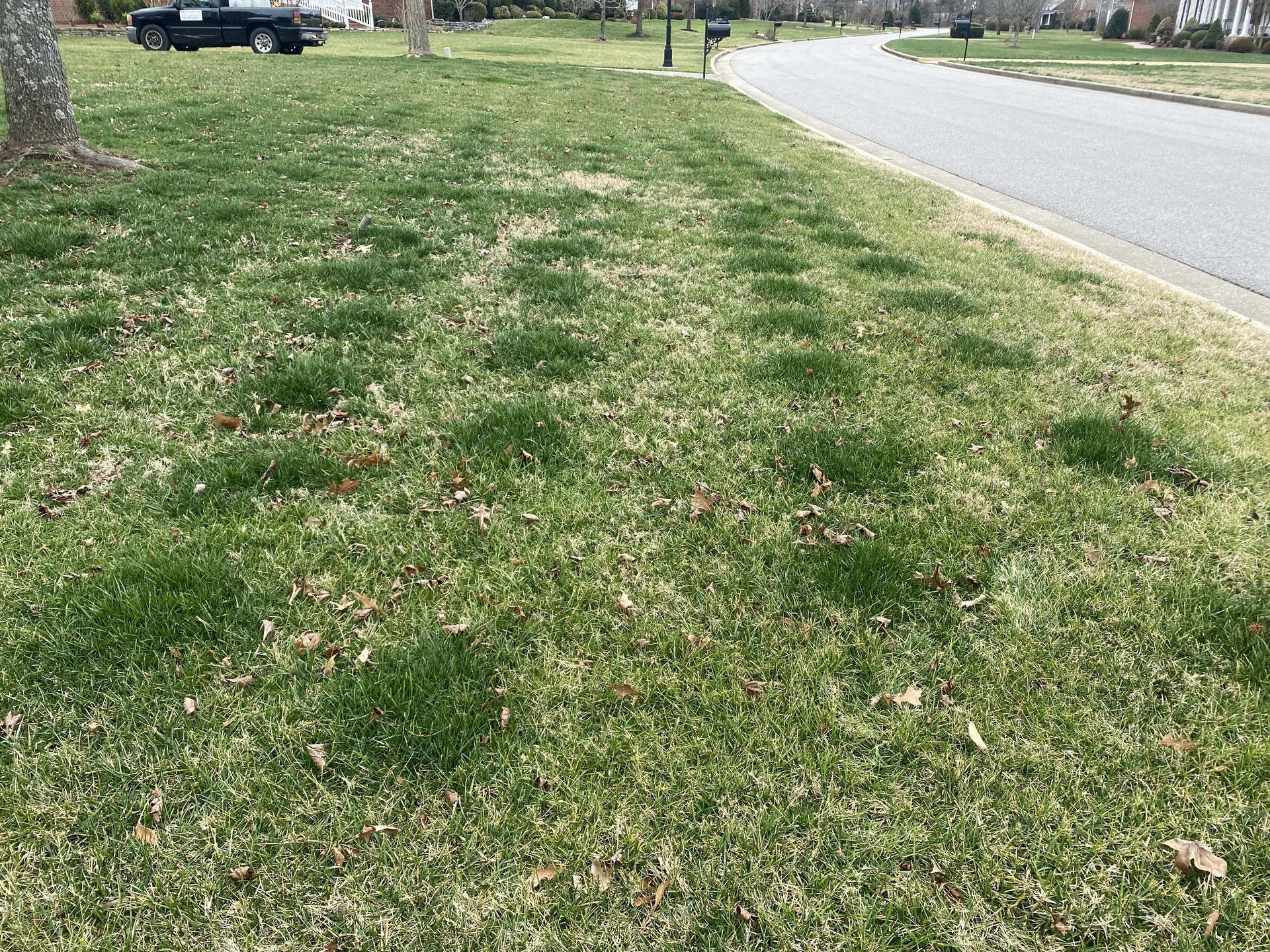
Then the part nobody selling aeration says out loud: genuinely destructive compaction is rare in a lawn. Nature works against it constantly through root channels, earthworm and soil biology, and the freeze and thaw a Zone 6b to 7a winter delivers. Real compaction is almost always something people did in the same footprint over and over. Out here that is easy to point at: the two-track where the truck runs to the barn, the turnaround where somebody pivots the mower every single week, the dog run, the patch a kid practices on every evening, the ground everybody parks on when family comes. Those strips earn two or three passes, and they earn a spring event on top of the fall one. The other several acres are not compacted. They are clay behaving like clay.