About Henbit
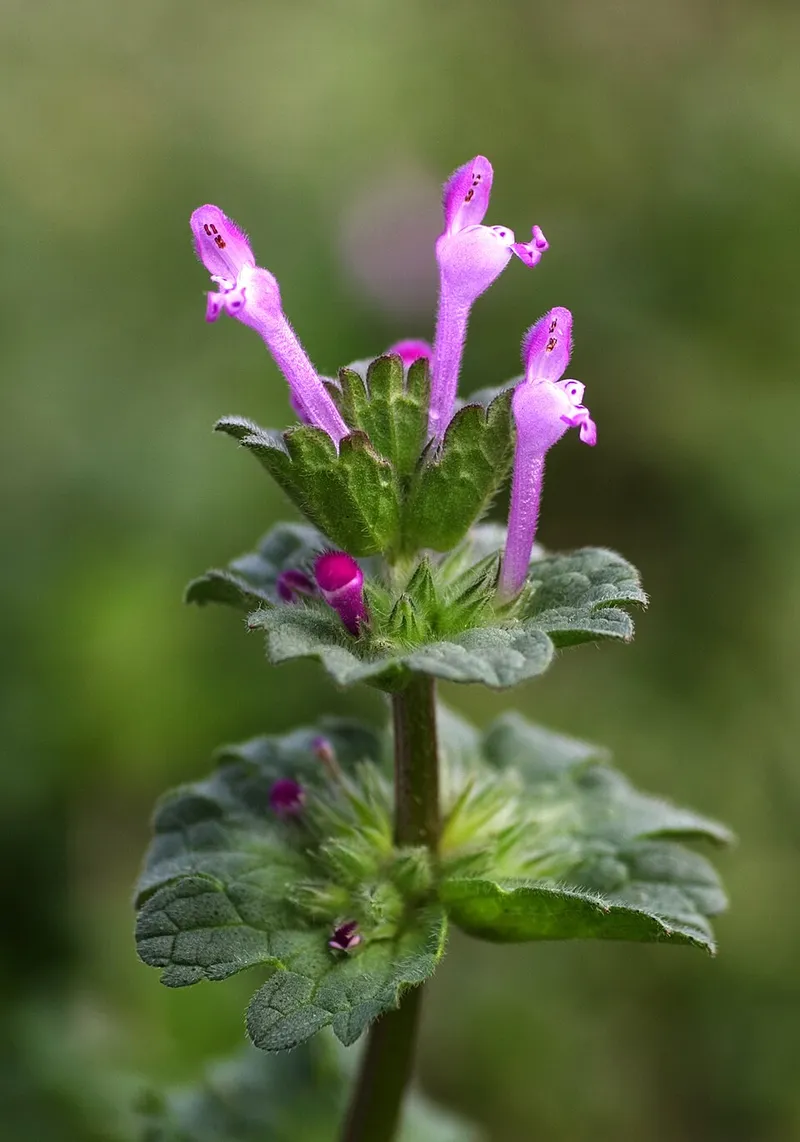
Henbit (Lamium amplexicaule) is a winter annual broadleaf weed that turns Middle Tennessee lawns purple-pink every March. It is often confused with purple deadnettle (Lamium purpureum), both are in the same genus, both have square stems and purple flowers, and both show up at the same time. The most reliable way to tell them apart is the flower shape, though in practice it does not matter much because the control approach is identical.
Henbit is in the easiest-to-control category of weeds in Middle Tennessee, same tier as chickweed, purple deadnettle, corn speedwell, and other winter annual broadleafs. One well-timed application of a broadleaf-selective herbicide in February kills it without resistance. There are many chemistry options available. You can even leave it alone if you like the purple flowers, some homeowners enjoy the early-spring color when fescue is still semi-dormant.
Like all winter annual broadleafs, henbit is part of the larger pre-emergent and early-post-emergent timing strategy. A pre-emergent applied in September or October prevents germination entirely. An early-spring post-emergent in February catches any that germinated through the winter. Either way, henbit is not a weed you should be worried about, if your lawn care program includes properly timed broadleaf treatments, you will never see it.
Quick Facts
- Common Name
- Henbit
- Scientific Name
- Lamium amplexicaule
- Type
- Turf Weed
- Region
- Middle Tennessee