Aeration for Triune Homeowners
I know how it is on your larger lot in Triune. Your grass thins out year after year, and you see bare spots along the property line bordering those hay fields. You've probably heard about aeration, but wondered if it's just another thing being sold. In our area, the truth about whether it works is specific and straightforward.
Around Triune, whether you're off Wilson Pike or near the historic Triune Methodist Church, the biggest problem with aeration is misunderstanding it. Many companies sell it as a magic fix on its own. Here's the fact: a core aeration in the spring will give you a nice green-up for a few weeks, but it will not change what your lawn looks like come July. It is not a long-term solution unless it is paired with seeding. My service is specifically a core aeration with overseeding, because that's the only way it delivers lasting results for your property. The aeration is just the tool to get the seed into your soil, ensuring it germinates instead of sitting on top of the thatch or getting washed away.
The Right Seed For Your Land
The second critical piece is the seed itself. If you're using cheap contractor mix or Kentucky 31, you're introducing a future weed problem, especially with properties adjacent to farmland. That seed is often contaminated with things like dallisgrass and Johnson grass, weeds that take years to control. I don't buy pre-mixed blends. Every year, I analyze university research trials from sites like Knoxville and Mississippi to select three or four top-performing cultivars for our climate. I blend them into a 90% tall fescue, 10% Kentucky bluegrass mix that is Sod Quality Certified, meaning it's lab tested with zero tolerance for noxious weeds. This builds a lawn that can handle our summer heat, crowd out weeds naturally, and even self-repair from minor damage.
My Diamond Pattern Technique
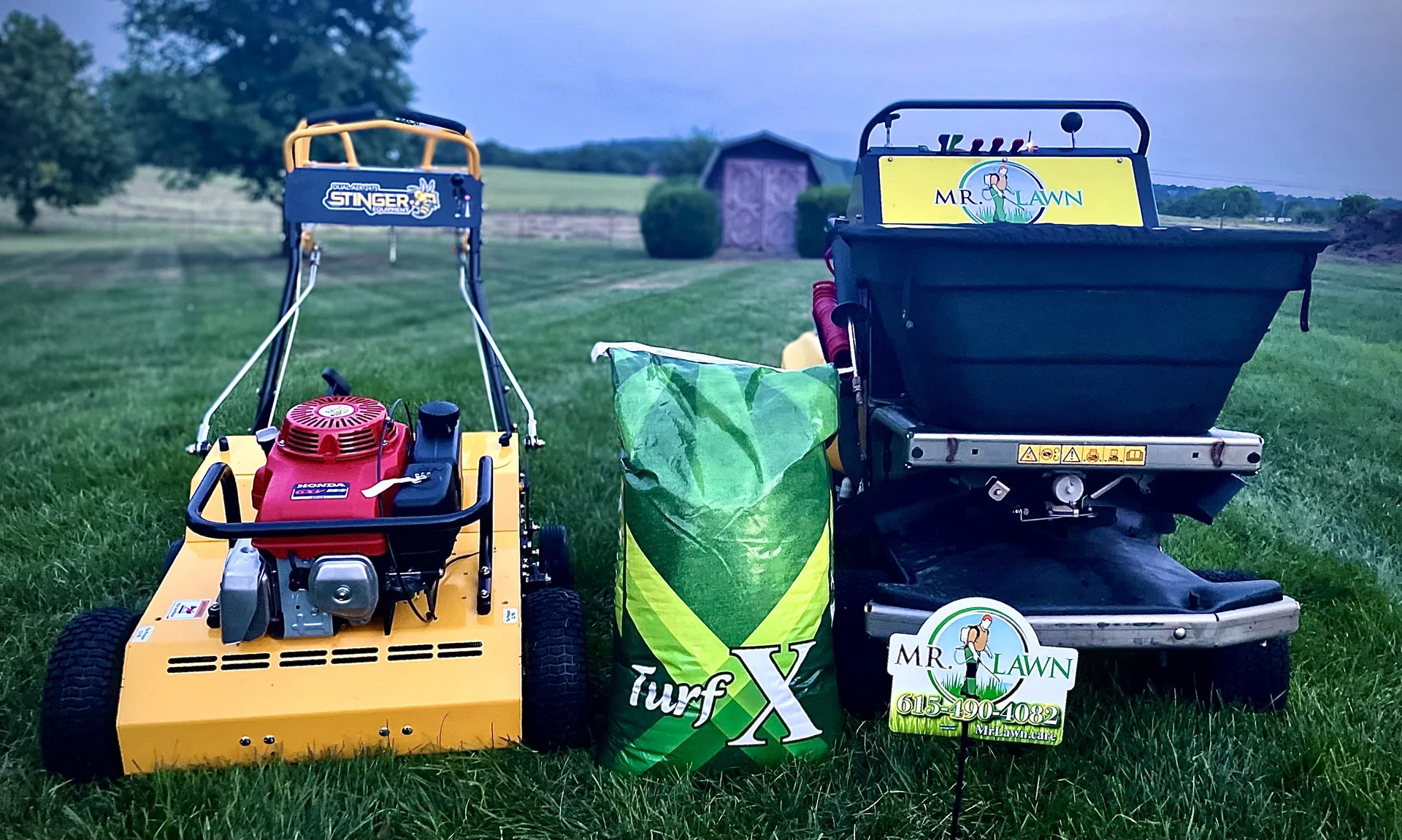
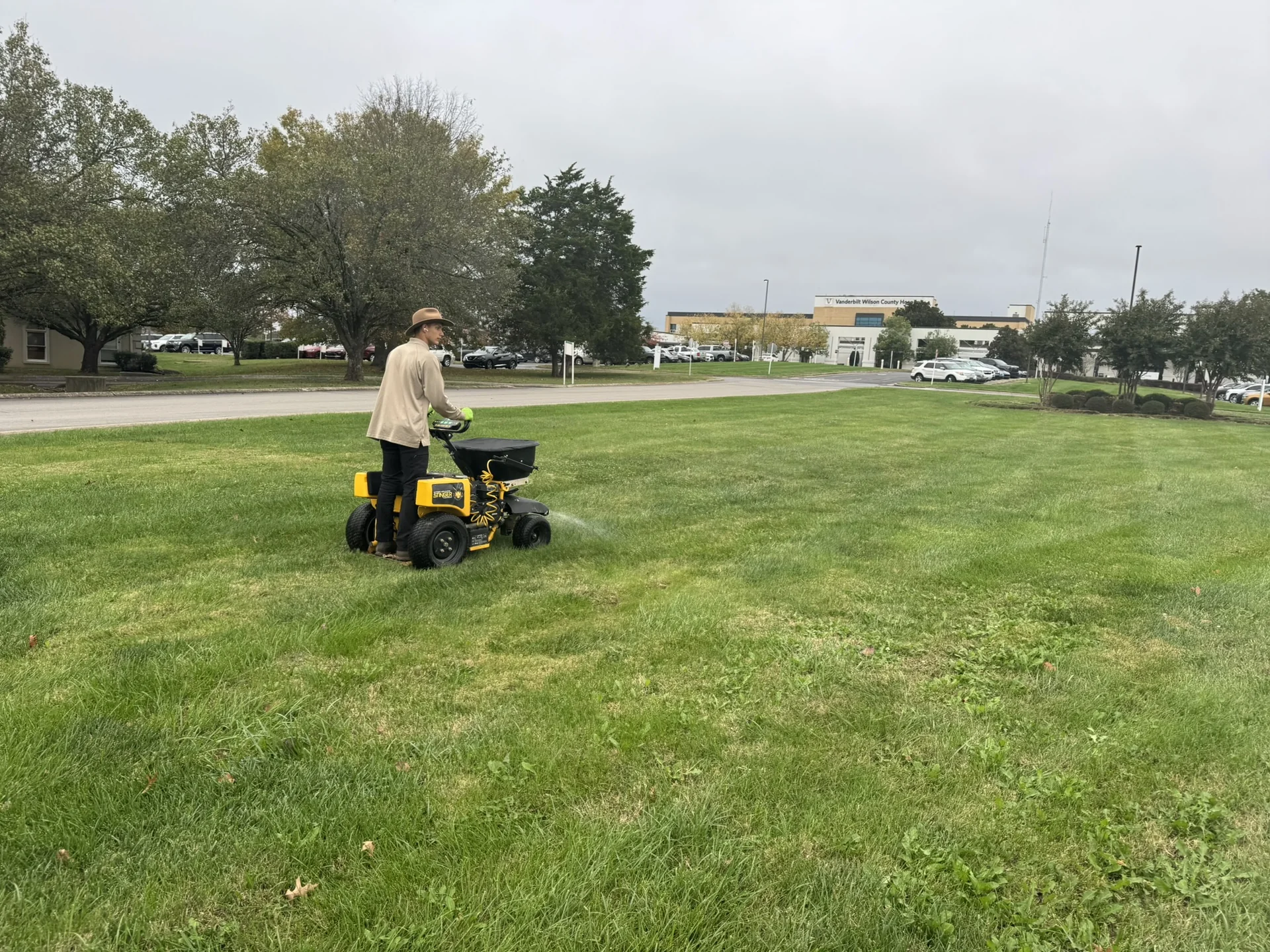
Even the method matters. You might see guys driving in circles with an aerator. That creates an uneven core density, leading to patchy germination. On your larger Triune lawn, that's a waste. I make two sets of parallel passes at a 45-degree angle to each other, creating a diamond pattern. This mathematically puts more holes per square foot and gives a uniform germination pattern for a consistently thick lawn. I use a commercial walk-behind aerator with a metered drop seeder attached, so the seed falls directly into the holes. This prevents seed from blowing into your flower beds or the neighboring field, and it ensures that last 10% of trouble spots fills in completely. The goal is no callbacks and a lawn that establishes fully before winter.
The best time for this in our area is September. Everyone wants to wait for perfect October weather, but seed needs time to germinate and establish before it exhausts the nutrients in its seed pod. I schedule these services in late summer for a fall appointment. You don't need this every year. If my standard treatment plan is working, we might only need to aerate and seed once every three years or so. The simple question is: do you have enough grass where you want grass? If the answer is no on your property, then this is the practical, guaranteed way to fix it.
Why Aeration Matters in Triune
Middle Tennessee fescue lawns thin every single summer. The combination of heat stress above 90°F and the region's persistent fungal pressure — brown patch and dollar spot thriving in our humid, dew-soaked conditions — means fescue loses density every year without exception. That thinning is why annual overseeding is not optional here; it is essential maintenance. Core aeration is the best way to prepare for fall overseeding without damaging the existing grass stand, and fall is when fescue naturally wants to recover and grow. The clay soils throughout Maury, Williamson, and Davidson counties do compact and benefit from the physical channels aeration creates, but the real Middle Tennessee reason to aerate is to set up the best possible overseeding result.